Why Every Custom Home Needs a Strong Construction Superintendent
Beautiful plans and premium materials can set the stage for an exceptional custom home, but they cannot build it. Once construction begins, success depends on how well hundreds of details, decisions, trades, and changing conditions are managed in the field.
Every successful build depends on an experienced construction team, but much of the day-to-day responsibility on the jobsite falls to the construction superintendent. This is the person on site looking ahead, coordinating the project team, checking workmanship, documenting progress, and catching issues while they can still be corrected efficiently. On a complex luxury home, strong supervision can directly affect quality, schedule, budget, and the homeowner's overall experience.
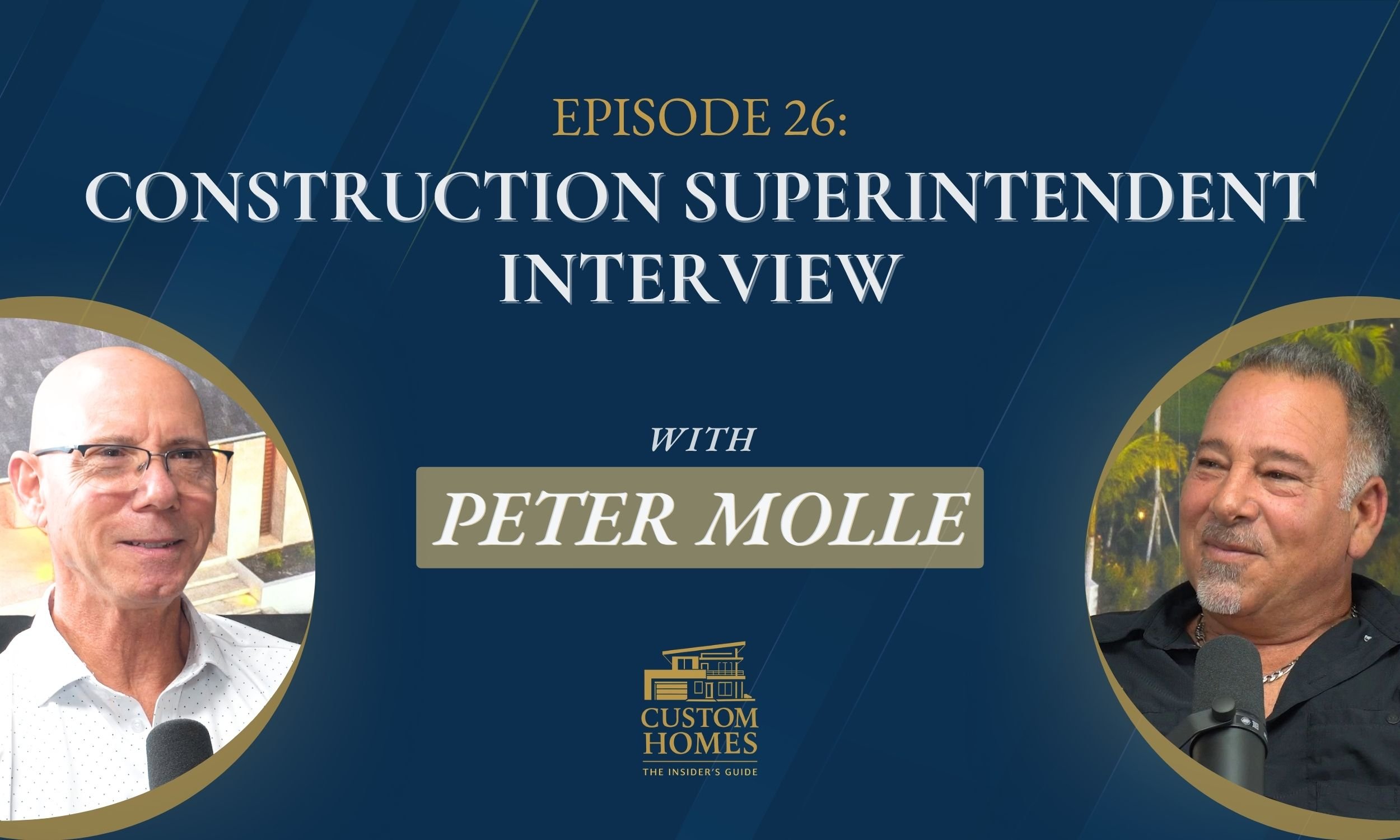
Landmark Custom Homes Superintendent Peter Molle brings decades of hands-on construction experience to that role. His career began in carpentry before progressing into field supervision, giving him a practical perspective on what it takes to turn detailed drawings into a well-built home. His experience reinforces an important lesson for homeowners: great execution requires someone who knows what to look for before problems appear.
LISTEN TO EPISODE 26 (FULL TRANSCRIPT ON TIGTCH.COM)
Key Takeaways
What a construction superintendent actually does and why this role is the backbone of a successful custom home build
How daily jobsite oversight and quality control help prevent costly rework
Why real-world field experience matters when plans alone cannot account for every construction condition
How RFIs and clear communication help resolve questions before they become larger problems
What homeowners can look for on site to determine whether their custom home project is being managed well
The Superintendent Connects the Entire Custom Home Team
A luxury custom home involves architects, engineers, interior designers, project managers, suppliers, subcontractors, and the homeowner. Each is responsible for a different part of the project, but someone needs to understand how all those pieces come together in the field.
Peter describes the construction superintendent as the "glue that holds it all together." The superintendent keeps communication moving between the project manager, architect, engineer, trade partners, and other members of the team while making sure new information reaches the right people. On high-end custom homes, where details and selections continue to develop during construction, that coordination is critical.
The role also requires looking ahead. A two- to three-week look-ahead helps anticipate upcoming work, coordinate subcontractors, and communicate schedule changes rather than waiting until a trade is needed on site. A well-managed construction schedule depends on that same forward planning, with decisions and trade coordination happening well before the work reaches the jobsite.
For homeowners, much of this work happens behind the scenes. What they experience is a project where questions are being addressed, upcoming work is being planned, and someone is taking responsibility for keeping construction moving.
Experience Helps Catch Problems Before They Become Expensive
Even detailed architectural and engineering plans cannot anticipate every condition encountered during construction. Dimensions may need clarification, drawings can conflict, and homeowner decisions may continue to shape the home as the project progresses.
An experienced superintendent learns to study those plans with the realities of construction in mind. That means spotting potential conflicts between structural elements and mechanical systems, questioning dimensions that may not work in the field, and bringing concerns to the architect or engineer before the affected work begins.
Finding those issues early can protect both schedule and budget. A question discovered during plan review may require a conversation and a simple adjustment. Finding the same problem after concrete has been poured or work installed can mean going backward and paying for rework. When things don't go as planned during a build, identifying the issue before it affects subsequent work can also help limit additional delays or costs.
Strong superintendents aren't simply putting out fires. They're staying ahead of the project, looking for the places where problems are most likely to occur and addressing them before they reach the jobsite.
Clear Communication Keeps Questions From Becoming Problems
Questions are normal on a complex custom home. What matters is how quickly they're recognized, communicated, documented, and resolved.
When something in the field doesn't match the plans or needs clarification, the superintendent can bring the architect, engineer, project manager, and affected trades into the conversation. The goal is to agree on the right solution before work continues, rather than making an assumption that may need to be corrected later.
Requests for Information, or RFIs, create a formal record of those decisions. On one of Peter's projects, the team had already reached RFI 52 relatively early in construction. On a complex custom home, a high number of RFIs isn't necessarily a red flag. It can reflect a team actively identifying questions, resolving them before work proceeds, and documenting the decisions.
Some decisions may also affect the project's scope, cost, or schedule. When they do, a clear change order process helps the homeowner and project team understand the impact before moving forward. Daily logs, progress photos, weekly reports, Matterport scans, and drone imagery add another layer of documentation, creating a record the team can reference months or even years later instead of relying on memory.
Quality Control Happens Before the Final Punch List
Quality control on a luxury custom home shouldn't begin when construction is nearly complete. By then, many mistakes are harder and more expensive to correct.
Strong supervision means setting expectations before work begins and checking the details as construction progresses. Tile layouts, trim, plumbing locations, switches, outlets, and other installations all need to be checked as construction progresses. Small inconsistencies can become much more noticeable once the finishes of a luxury home come together.
The same thinking applies to the punch list. Peter prefers to identify and address incomplete or corrective items throughout the build rather than allowing hundreds of issues to accumulate at the end. This gives trades an opportunity to make corrections while they're still involved and helps create a cleaner transition when the home is ready for its owners.
Schedule matters, but it shouldn't come at the expense of workmanship. Rushing into a home before it's truly ready can leave owners living around unfinished work and corrections that could have been completed with a little more time.
Strong Superintendents Set the Standard for the Jobsite
Hiring skilled trade partners is important, but high-end custom construction still requires active oversight. Everyone working on the home needs to understand the expectations for the project before their portion of the work begins.
Peter establishes those expectations early, then checks the work as it progresses. Over time, that creates accountability and mutual respect between the superintendent and trade partners. It's not about micromanaging experienced craftsmen. It's about making sure everyone is working toward the same standard.
Experience also helps identify the right trades for a project. Previous work, craftsmanship, and experience with complex homes can matter more than simply choosing the lowest price. On a luxury custom home, poor workmanship can quickly erase any initial savings if it leads to corrections, delays, or rework.
For homeowners interviewing builders, this leads to an important question: Who will actually supervise your home? Ask about their experience, previous projects, approach to quality control, and the other homes they're responsible for. And don't stop at the interview. Checking references for your custom home team can also provide valuable insight into how those professionals communicate, manage challenges, and perform once construction begins.
Where a Custom Home Build Can Start to Lose Ground
Even a strong design can suffer when day-to-day field leadership is weak. These are five areas where seemingly small oversights can become much larger problems:
Assuming the drawings have every answer
Plans are essential, but field conditions and evolving details will create questions. Someone needs enough experience to recognize when a detail deserves a second look.
Letting trades make decisions in isolation
A plumbing, tile, trim, or mechanical decision can affect several phases that follow. Even small field decisions should be considered in the context of the entire home.
Waiting until the end to inspect quality
Corrections are usually easier while the trade is still on site and before additional work covers or builds upon the problem.
Relying on conversations instead of documentation
Months into a custom build, memories can differ. RFIs, photographs, daily reports, and written decisions give the project a reliable record.
Rushing the finish just to meet a date
Moving in before a home is truly ready can turn the final weeks of construction into months of inconvenience. Quality shouldn't be sacrificed simply to meet an unrealistic deadline.
Before You Choose a Builder: Look Beyond the Finished Homes
A completed custom home can tell you a lot about a builder. An active jobsite can tell you something different.
Before choosing a custom home builder, consider visiting projects that are currently under construction. Look beyond the architecture and pay attention to how the site itself is being managed. Is it clean and organized? Does the work appear deliberate? Does the project feel controlled or chaotic?
Use this quick checklist during your visit:
✔ Look for active field supervision.
Is an experienced superintendent regularly overseeing the work?
✔ Notice how organized the jobsite feels.
Cleanliness, material storage, and orderly work areas can reveal how the project is managed.
✔ Look closely at the details.
Alignments, layouts, transitions, and finished dimensions should show consistent attention.
✔ Ask how field questions are handled.
There should be a clear process for communicating and documenting issues.
✔ Ask how quality is checked during construction.
Quality control should happen continuously, not only at the final walkthrough.
✔ Find out how upcoming work is planned.
Strong superintendents are thinking weeks ahead, not simply reacting to today's schedule.
✔ Ask who will actually manage your home.
Learn about the superintendent's experience and how much attention they can give your project.
✔ Review other projects they've supervised.
Current and completed projects can show how their standards carry through different stages of construction.
✔ Pay attention to the people.
Building a custom home is a long relationship, so you should feel comfortable communicating with the team you'll be working with.
The Best Work on a Custom Home Is Often the Work You Never See
When a custom home is complete, homeowners see the architecture, finishes, and craftsmanship. What they don't see are the questions asked before work proceeds, conflicts caught before installation, and countless details checked along the way. Strong field leadership helps keep those small issues from becoming larger problems that affect quality, schedule, or budget.
At Landmark Custom Homes, experienced superintendents work closely with the entire project team to keep construction organized, communication clear, and quality standards consistent throughout the build.
If you're planning a luxury custom home in South Florida, contact Landmark Custom Homes to discuss your project and learn more about the experienced team that will oversee it.