How Much Does It Cost to Build a Custom Home in South Florida in 2026?
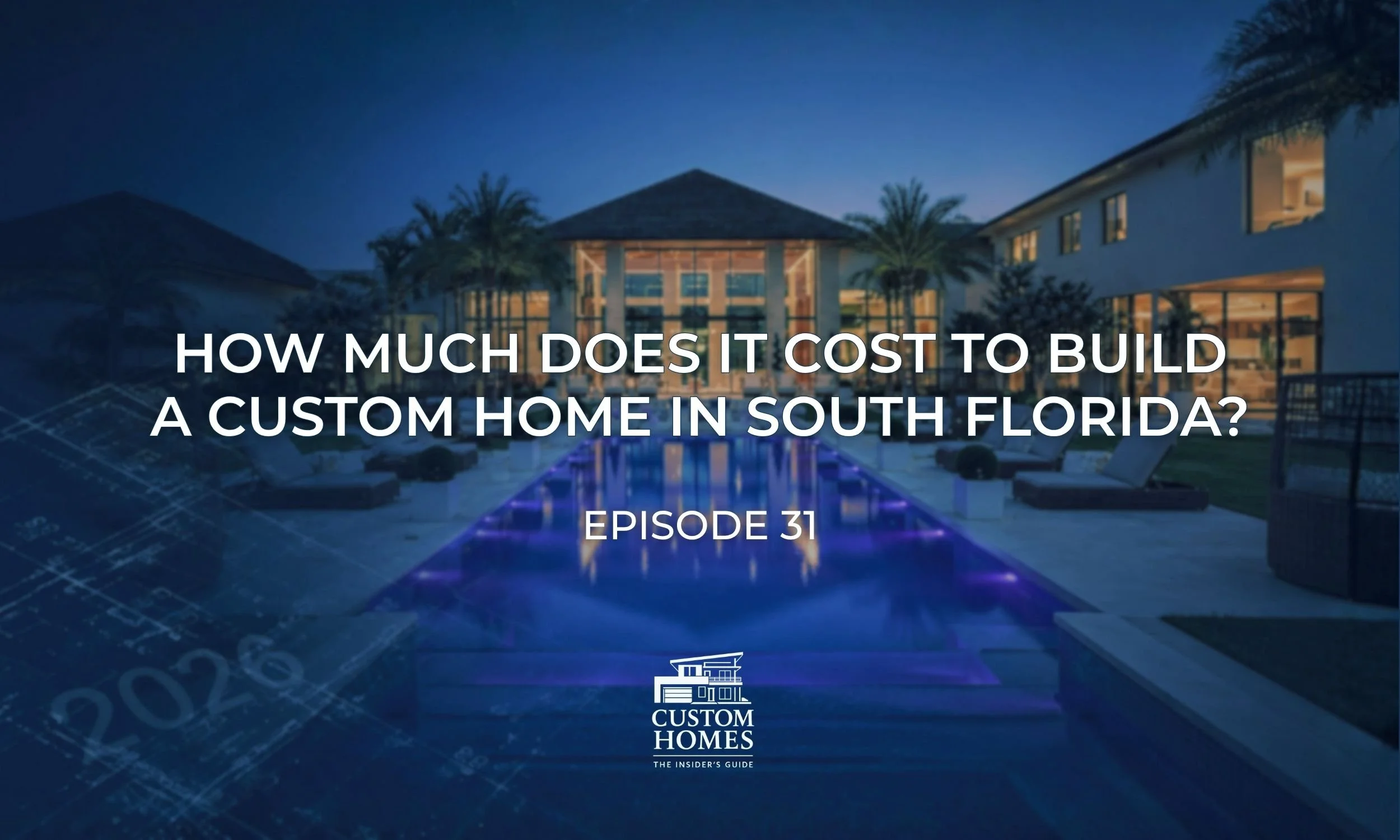
If you're planning to build a custom home, one of the first questions you'll probably ask is, “How much will it cost?” It's a reasonable question, but there isn't one number that applies to every South Florida custom home.
How Much Does It Cost to Build a Luxury Custom Home in South Florida in 2026?
For 2026, Landmark Custom Homes generally sees hard construction costs of approximately $350 to $1,200+ per square foot for custom homes in South Florida, depending on the level of customization, finishes, design complexity, and site conditions.
• Entry-level custom homes: Approximately $350–$500 per square foot
• Mid to high-end custom homes: Approximately $500–$800 per square foot
• Ultra-luxury custom homes: Approximately $800–$1,200+ per square foot
These figures represent hard construction costs only. They do not include the homesite, professional services, furnishings, or other project-related expenses.
These ranges are a starting point, not a fixed quote. Every custom home is shaped by the home you want to build, the homesite you choose, the materials you select, and the decisions made before construction begins.
The better approach is to understand what drives the cost of a custom home and what should be included in your overall project budget. Once you know where your investment goes and what influences the budget, you'll be in a much stronger position to plan your project and make informed decisions from the beginning.
LISTEN TO EPISODE 31 (FULL TRANSCRIPT ON TIGTCH.COM)
Key Takeaways
Why cost per square foot doesn't always provide an accurate estimate of what it costs to build a custom home
What the four major cost categories are and how each one contributes to your overall budget
How design complexity, finish selections, and site conditions can influence the total cost of your home
Why establishing a realistic budget early helps you make better decisions throughout the building process
How bringing your builder and design team together early helps keep your project aligned with your budget and goals
Why Cost Per Square Foot Doesn't Tell the Whole Story
Cost per square foot is often the first number homeowners compare when estimating the cost of building a custom home. While it's a useful benchmark, it doesn't provide a complete picture of what your project will actually cost.
A custom home is far more than its size. Architectural details, structural engineering, premium materials, luxury finishes, outdoor living spaces, and the unique characteristics of your homesite all influence the final investment. Two homes with identical square footage can vary significantly in price simply because the homeowners made different design decisions.
It's also important to understand how builders calculate square footage. Some measure only the air-conditioned living space, while others include garages, covered lanais, balconies, and entryways. Because there isn't a universal standard, comparing one builder's cost per square foot to another's can easily create unrealistic expectations.
The better way to think about cost is to look beyond a single number and understand what actually goes into building your home. That's where your budget starts to become much more meaningful.
Where Your Budget Really Goes: The Four Costs Behind Every Custom Home
Once you move beyond price per square foot, it's easier to understand how a custom home budget actually comes together. Rather than focusing on one number, it's more helpful to look at four major cost categories that provide a much more complete picture of what it takes to build a custom home in South Florida.
These categories also help you ask better questions early in the planning process. Instead of wondering whether a home costs "$500 per square foot," you'll begin to understand why one custom home may cost significantly more than another, even when the homes are similar in size.
1. Land: More Than Just the Purchase Price
The homesite is often one of the largest investments, especially in desirable South Florida communities. Beyond purchasing the property, homeowners may also need to budget for demolition, clearing, fill, utility connections, drainage improvements, or other site preparation before construction begins.
If you're still looking for the right property, knowing what to evaluate before buying a homesite can help you identify potential costs before making an investment.
2. Hard Construction Costs: Building the Home Itself
Hard construction costs include everything that physically goes into building your home. This includes the foundation, framing, roofing, windows, doors, mechanical systems, cabinetry, flooring, trim, and interior finishes.
This is typically the largest portion of your budget, but it's also where many of your personal choices come into play. Material selections, custom details, and the level of craftsmanship all influence the final investment. That's why finish selections and allowances become such an important part of planning your budget.
3. Soft Costs: The Professionals Behind the Project
Long before construction begins, a team of professionals is already helping bring your project to life. Architects, engineers, surveyors, interior designers, permitting agencies, and other consultants all contribute to the planning process.
These expenses don't become part of the physical home, but they're essential to a successful project. Building a realistic construction budget means accounting for these professional services alongside construction costs rather than treating them as an afterthought.
4. Site and Special Conditions: Every Property Is Different
No two homesites are exactly alike. Soil conditions, elevation requirements, seawalls, pools, landscaping, utility connections, and other site-specific improvements can all influence your overall investment.
Some properties are ready to build on, while others require significant preparation before construction can begin. Being aware of these site conditions early gives you a more realistic picture of your total budget and helps avoid unexpected expenses later.
What Does the Total Project Cost Include?
The construction cost per square foot is only one part of the overall investment. Depending on the project, your budget may need to account for:
| Cost category | What it can include |
|---|---|
| Land | Homesite purchase, demolition, clearing, and related property costs |
| Hard construction | Foundation, structure, roofing, windows, mechanical systems, cabinetry, flooring, trim, and finishes |
| Professional and soft costs | Architecture, engineering, surveying, interior design, permitting, and other consultants |
| Site and special conditions | Drainage, elevation, utilities, seawalls, pools, landscaping, site preparation, and other property-specific work |
The exact scope varies by project and by builder. Before comparing prices, ask each builder to clearly identify what is included, what is excluded, and what is carried as an allowance.
A Real-World Example
Imagine you're planning a 5,000-square-foot custom home in South Florida.
You purchase a homesite for $700,000 and estimate approximately $2 million in hard construction costs. Add architectural and engineering fees, permits, surveys, and other professional services, and your investment is already approaching $3 million before considering premium upgrades or extensive outdoor living features.
Now imagine making different design decisions. Higher-end finishes, custom architectural details, specialty materials, or more complex engineering can significantly increase the overall investment, even though the home's square footage never changes.
The home's size stays the same. The decisions you make are what shape the final cost of your custom home.
What Is Not Included in the Hard Construction Cost?
The $350–$1,200+ per-square-foot ranges above are for hard construction costs only. Depending on the project and contract, homeowners may also need to budget separately for:
• Land or the homesite
• Demolition and site preparation
• Architecture and engineering
• Surveys and permitting
• Interior design
• Landscaping and pool or outdoor improvements
• Furnishings
• Special site conditions
• Other owner-specific or project-related costs
Always ask for a clear scope of work so you understand exactly what the construction price includes and excludes.
Questions to Ask Your Builder About Cost
Before comparing custom home prices, ask:
1. What exactly is included in the construction price?
2. What is excluded?
3. Which items are allowances?
4. Are site-development costs included?
5. Are design and engineering fees included?
6. How are changes handled during construction?
7. What assumptions were used to calculate the price?
8. How are unforeseen site conditions handled?
9. How often will the budget be updated?
10. What should I budget for beyond the construction contract?
Why Builder Proposals Can Have Different Prices
Two builders can give you different prices for the same home because their proposals may use different scopes, specifications, allowances, assumptions, or exclusions.
A lower construction price does not necessarily mean a lower total project cost if important items have been excluded or carried as allowances. When comparing builders, look at the complete scope and understand what each proposal actually covers.
What Really Drives the Cost of a Custom Home?
Once you understand the four major cost categories, the next question becomes: What actually causes one custom home to cost more than another?
Several factors play a role, but these four consistently have the greatest impact on the overall cost of a custom home. The good news is that many of them are within your control when they're considered early in the planning process.
Design Complexity
A home's architectural design has a direct impact on construction costs. Features such as intricate rooflines, large spans of glass, custom structural elements, and unique architectural details often require additional engineering, materials, and labor.
That doesn't mean simpler is always better. It means every design decision should support both your vision and your budget. One of the best ways to accomplish that is designing to a realistic budget, so your builder and architect to design with both your vision and your investment goals in mind.
Material and Finish Selections
The materials you choose throughout your home can significantly influence the final investment. Cabinetry, flooring, countertops, lighting, plumbing fixtures, and appliances all contribute to the overall budget.
Planning these selections early helps establish realistic expectations and reduces the likelihood of costly changes later in the project.
Your Homesite
Every property presents its own opportunities and challenges. Soil conditions, drainage requirements, utility access, elevation, demolition, and waterfront considerations can all affect construction costs before the first foundation is poured.
Due diligence is an important part of purchasing land. Understanding your homesite early gives you a much clearer picture of your overall investment.
Early Planning Makes the Difference
Perhaps the biggest factor isn't a material or design feature at all. It's planning.
Bringing your builder, architect, and interior designer together early allows the entire team to work toward the same goals from the beginning. It also creates more opportunities to make adjustments before those decisions become costly changes during construction.
Budget Decisions That Can Cost More Than You Expect
Most budget overruns aren't caused by one major decision. They're usually the result of several smaller ones that add up over time.
Focusing Too Much on Price Per Square Foot
Price per square foot is a helpful benchmark, but it should never be used as the total cost of a custom home. Design complexity, finish selections, engineering requirements, and site conditions all influence the final investment.
Forgetting About the Costs Beyond Construction
The home itself is only one part of the overall investment. Land, professional services, permits, and site preparation all contribute to the total project cost. Planning for every category from the beginning leads to fewer surprises later.
Designing First, Budgeting Later
Designing before establishing a realistic budget often leads to redesigns, compromises, or unexpected costs that could have been avoided through earlier planning.
Bringing Your Builder Into the Process Too Late
Many homeowners wait until plans are complete before involving a builder. Inviting your builder into the conversation earlier provides valuable budgeting insight while there is still flexibility to make adjustments before construction begins.
Assuming Small Changes Won't Affect the Budget
Changes made during construction rarely affect just one part of the project. Even a seemingly minor revision can influence labor, materials, scheduling, and the overall budget.
Before You Break Ground: Smart Budget Planning for Your Custom Home
✔ Look beyond cost per square foot and consider your home's design, finishes, site conditions, and overall complexity.
✔ Plan for all four cost categories so you can build a realistic budget from the very beginning.
✔ Establish your budget before making major design decisions to keep your plans and expectations aligned.
✔ Research your lot carefully, as site conditions can significantly impact your overall construction costs.
✔ Prioritize your must-have features so you can invest where they'll add the most long-term value.
✔ Bring your builder, architect, and designer together early to help keep your project on budget.
✔ Finalize major design decisions before construction begins to reduce change orders and costly delays.
✔ Set aside a contingency fund to prepare for unforeseen conditions or upgrades during construction.
✔ Focus on building the right home for your lifestyle, not simply the lowest price per square foot.
Frequently Asked Questions
How much does it cost per square foot to build a luxury custom home in South Florida in 2026?
Landmark Custom Homes generally sees hard construction costs of approximately $350–$1,200+ per square foot, depending on the level of customization, finishes, design complexity, and site conditions.
Does the cost per square foot include the land?
No. The ranges in this article represent hard construction costs only and exclude the homesite.
What other costs should I budget for besides construction?
Depending on the project, homeowners should consider land, professional services, permits, site preparation, furnishings, landscaping, pools, and other project-specific costs.
Why can two homes of the same size cost very different amounts?
Design complexity, materials, finishes, engineering requirements, site conditions, and other project decisions can significantly change the cost even when two homes have the same square footage.
Should I use cost per square foot when comparing builders?
Cost per square foot can be a useful starting point, but it should not be the only basis for comparison. Builders may define square footage differently and may include different scopes, allowances, and exclusions.
When should I establish my construction budget?
Establish a realistic budget early, before major design decisions are made. Bringing the builder, architect, and interior designer into the process early can help keep the design aligned with the budget.
Choose Experience and Build on the Right Foundation
Every custom home is different, which is why there isn't a single formula for determining what it will cost. The best place to start is by understanding the factors that shape your investment and making informed decisions before construction begins.
At Landmark Custom Homes, we believe successful projects begin with realistic budgeting, thoughtful planning, and open communication. Our team works closely with homeowners throughout the planning process so they understand where their investment goes and how each decision contributes to the finished home.
Ready to take the next step? Contact Landmark Custom Homes to start your project on the right foundation, avoid costly surprises, and enjoy building your home with greater peace of mind.