Why Strong Project Management Matters in a Luxury Custom Home Build
A luxury custom home can involve hundreds of decisions across design, construction, budget, schedule, and selections. Each decision may involve different people, and what happens in one part of the project can affect work that will not begin for weeks or even months.
That is where strong project management becomes essential. The project manager connects the homeowner with the superintendent, architect, interior designer, and other members of the team while keeping decisions, schedules, budgets, and communication moving together. The goal is not simply to manage tasks. It is to keep the homeowner informed and the entire project organized as the home takes shape.
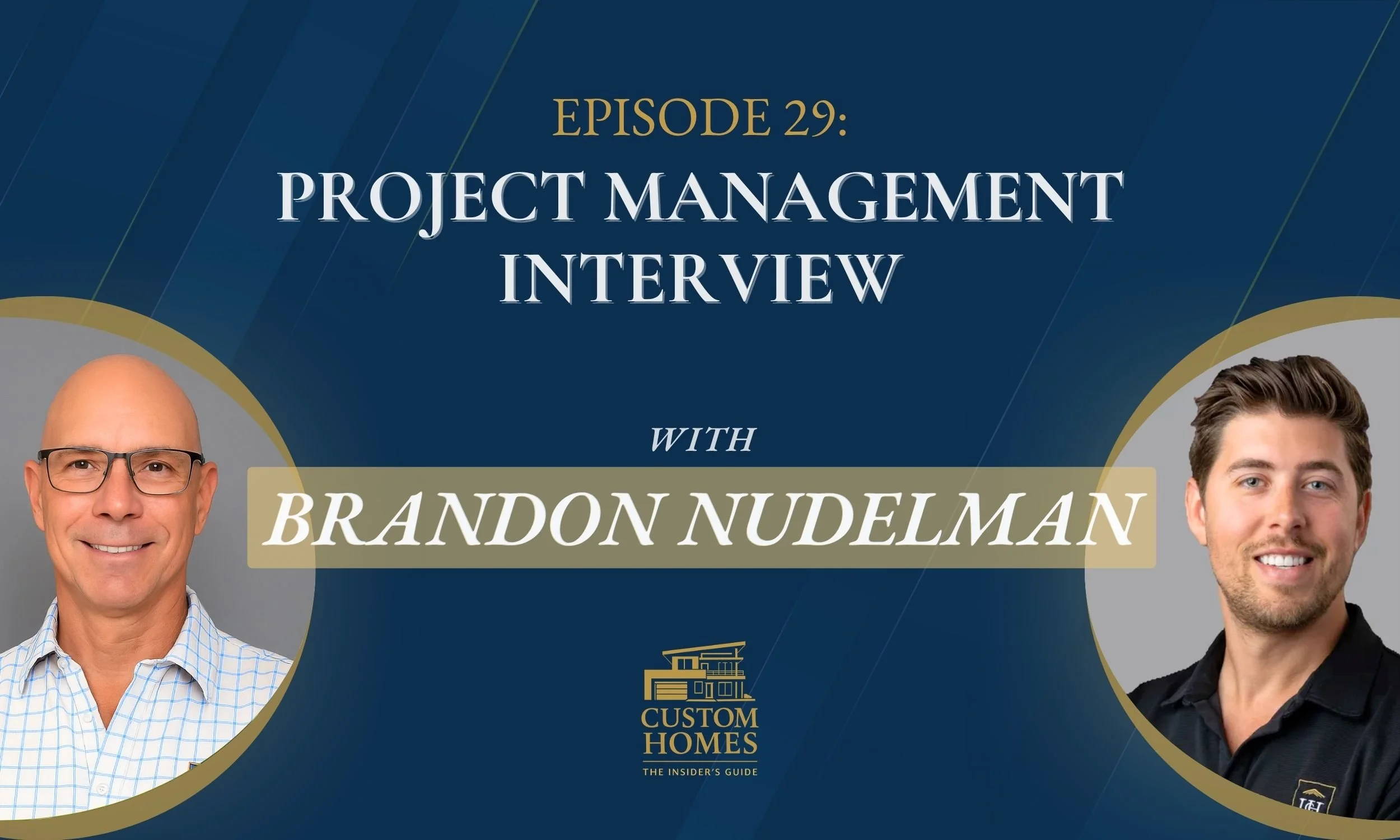
Landmark Custom Homes Partner and President Brandon Nudelman brings more than a decade of experience to that role. His background includes time in the field before moving into project management, giving him a practical understanding of construction as well as the systems needed to manage increasingly complex luxury homes. That combination has shaped his approach to schedules, SOPs, client communication, budget awareness, and the many small decisions that can have a much larger impact later in the build.
LISTEN TO EPISODE 29 (FULL TRANSCRIPT ON TIGTCH.COM)
Key Takeaways
What a project manager actually does during a luxury custom home build, including coordinating the homeowner, superintendent, architect, designer, schedule, and other moving parts
How detailed construction schedules and Standard Operating Procedures (SOPs) help organize complex projects and keep important steps from being overlooked
Why clear communication between homeowners, architects, designers, superintendents, and trade partners matters throughout the custom home building process
How seemingly small details, including selections and proper sequencing, can prevent expensive mistakes, delays, and unnecessary rework
What defines a well-run custom home project and how strong project management contributes to a more positive homeowner experience
The Project Manager Connects the Moving Parts
On a high-end custom home, the project manager is responsible for much more than checking a schedule. Brandon describes the role as the “ringleader” connecting the superintendent, architect, designer, and client. Meetings need direction, decisions need follow-up, selections need to happen on time, and design information needs to be ready before construction reaches the point where it is required.
The superintendent plays a closely related role in the field, overseeing day-to-day construction and trade activity. The project manager maintains a broader view across the homeowner, design professionals, schedule, budget, and field team. The two roles overlap in important ways, but each brings a different perspective to the project.
Keeping a custom home construction project moving smoothly requires consistent coordination across every specialty involved. A decision made during an interior design meeting may eventually affect purchasing, scheduling, field conditions, or several trades. Someone needs to keep track of those connections before they become conflicts.
For the homeowner, that creates a clear point of contact. Instead of trying to manage separate conversations across the entire team, the project manager helps organize the information, keep decisions moving, and make sure the people involved understand what needs to happen next.
Good Project Management Plans for Decisions Before They Become Urgent
Some of the most expensive problems in custom construction begin as very small details.
Brandon gives the example of a shower drain. Before the foundation is poured, a homeowner may not be thinking about whether the shower will have a standard square drain or a linear drain. But if that preference isn't identified until later, changing it can mean chipping concrete and re-pitching the shower. A simple question asked at the right time can avoid significant cost, rework, and weeks of aggravation.
That is one reason Brandon helped develop detailed Standard Operating Procedures and checklists for Landmark's project managers and superintendents. When a question or problem arises on one project, the lesson can be added to the process so future teams know to check it earlier. The systems have continued to grow as Landmark's field team contributes its own experience.
The same principle applies to selections and allowances. Flooring, plumbing fixtures, countertops, cabinetry, and other design decisions have to align with the construction sequence, lead times, and budget. Good project management gives homeowners enough time to make thoughtful choices before those decisions begin putting pressure on the schedule.
A Detailed Schedule Gives Everyone a Clearer Picture
Brandon's approach to scheduling goes beyond broad milestones. Rather than listing “countertops” as one task for an entire home, Landmark's micro-schedules can track countertops by individual areas so the team can see what is installed, what remains, and where the project actually stands.
That level of detail takes more work upfront, but it gives the superintendent a clearer look ahead and helps the project manager provide homeowners with more meaningful information. It also helps coordinate busy trade partners who need adequate notice rather than a last-minute request to arrive on site.
A detailed construction schedule also makes it easier to see when a decision, design detail, permit, material, or trade could affect upcoming work. Instead of simply telling a homeowner that construction will take a certain number of months, the schedule provides a working plan that can be reviewed and updated as the project progresses.
For homeowners, the benefit is visibility. They can better understand where the project stands, what is coming next, and which decisions require their attention before they begin affecting the build.
Budget Communication Helps Homeowners Stay in Control
Luxury custom homes offer an enormous range of design possibilities, and seemingly modest upgrades can accumulate quickly. Brandon sees part of the project manager's role as helping homeowners understand those impacts while they still have the opportunity to make an informed choice.
Landmark's budget reporting allows homeowners to track where the project began, what has changed, and how those changes have affected the overall cost. If a homeowner chooses a material above the amount allocated in the budget, the important part is making that impact visible rather than allowing many individual decisions to become a surprise later.
That awareness can begin even earlier with the design team. Brandon discusses providing designers with material budgets before selections are presented to the homeowner. It is far easier to establish realistic expectations before someone falls in love with a particular tile, countertop, or finish than to discover afterward that it falls well outside the planned budget.
When a homeowner chooses to alter the work, a clearly documented change order provides another opportunity to understand the effect on cost, scope, or schedule before moving ahead. The homeowner remains in control of the decision, but with better information about what that decision means for the larger project.
Transparency Matters Most When Something Goes Wrong
Even on a well-managed custom home, problems can happen. Plans can contain conflicts, field conditions can differ from expectations, and mistakes can occur. Brandon's approach is not to pretend those situations can be eliminated entirely, but to handle them openly when they arise.
Transparency starts with explaining what happened. Just as important, Brandon prefers not to bring a homeowner a problem without first developing possible remedies. Presenting options gives the owner a clearer path forward and allows the conversation to focus on solving the issue rather than simply announcing bad news.
Communication throughout the rest of the project matters just as much. Some homeowners want updates several times a week, while others prefer less frequent communication. The cadence can vary, but Brandon believes homeowners should consistently know what is happening with their project.
That openness helps preserve trust when construction does not go exactly according to plan. How problems are handled throughout a custom home build can matter just as much as avoiding the problem in the first place.
Where Strong Custom Home Project Management Adds Value
Strong project management is often most visible in the problems homeowners never have to experience. A decision is requested before it becomes urgent, a budget impact is identified before a selection is finalized, or a conflict is addressed before the next trade arrives.
Connecting the homeowner with the entire project team
The project manager keeps communication moving between the client, superintendent, architect, designer, and other professionals involved in the home.
Turning lessons into better systems
SOPs and checklists help capture lessons learned on previous projects so important details can be checked earlier on future builds.
Keeping design decisions aligned with construction
Selections need to happen early enough to support procurement, sequencing, and installation rather than becoming last-minute obstacles.
Giving homeowners a clearer view of schedule and budget
Detailed tracking helps owners understand where the project stands and how their decisions may affect cost or timing.
Bringing solutions when challenges arise
Strong project management doesn't mean nothing will ever go wrong. It means problems are communicated clearly and addressed with practical options.
What a Well-Managed Luxury Custom Home Project Looks Like
Homeowners may not see every meeting, checklist, schedule update, or conversation happening behind the scenes. But there are signs that a custom home project is being managed with discipline and attention.
✔ The construction schedule is detailed and regularly updated
The team should know where the project stands rather than relying on a broad completion estimate.
✔ Homeowner decisions have clear deadlines
You should know when selections and approvals are needed and why the timing matters.
✔ The project manager communicates consistently
Updates should match your preferred communication style while keeping you informed about meaningful progress and decisions.
✔ Budget changes are visible
You should be able to understand what changed, why it changed, and how it affects the overall custom home budget.
✔ The design and construction teams stay connected
Architects, interior designers, superintendents, and project managers should not be working in isolation.
✔ Problems come with possible solutions
When something goes wrong, the conversation should include practical options for moving forward.
✔ The jobsite is clean, active, and organized
Brandon considers schedule performance, protection, cleanliness, and visible trade activity important signs of a well-run project.
✔ Systems support the people managing the home
Checklists and SOPs provide another layer of consistency on projects with hundreds of details.
✔ References reflect the day-to-day management experience
They can help you understand what the experience is really like once construction begins.
A Successful Custom Home Is Also About the Experience of Building It
The finished home will always matter, but Brandon's perspective adds another measure of success: how the homeowner feels about the experience that produced it. Building a highly customized home requires decisions, meetings, adjustments, and a significant commitment from the owner. Strong project management gives those moving parts structure while keeping the homeowner informed and involved throughout the process.
At Landmark Custom Homes, project management is built around detailed planning, established systems, open communication, and a close working relationship with each homeowner. If you're planning a luxury custom home in South Florida, contact Landmark Custom Homes to discuss your project and learn how thoughtful project management can support both the home you want to build and the experience of getting there.