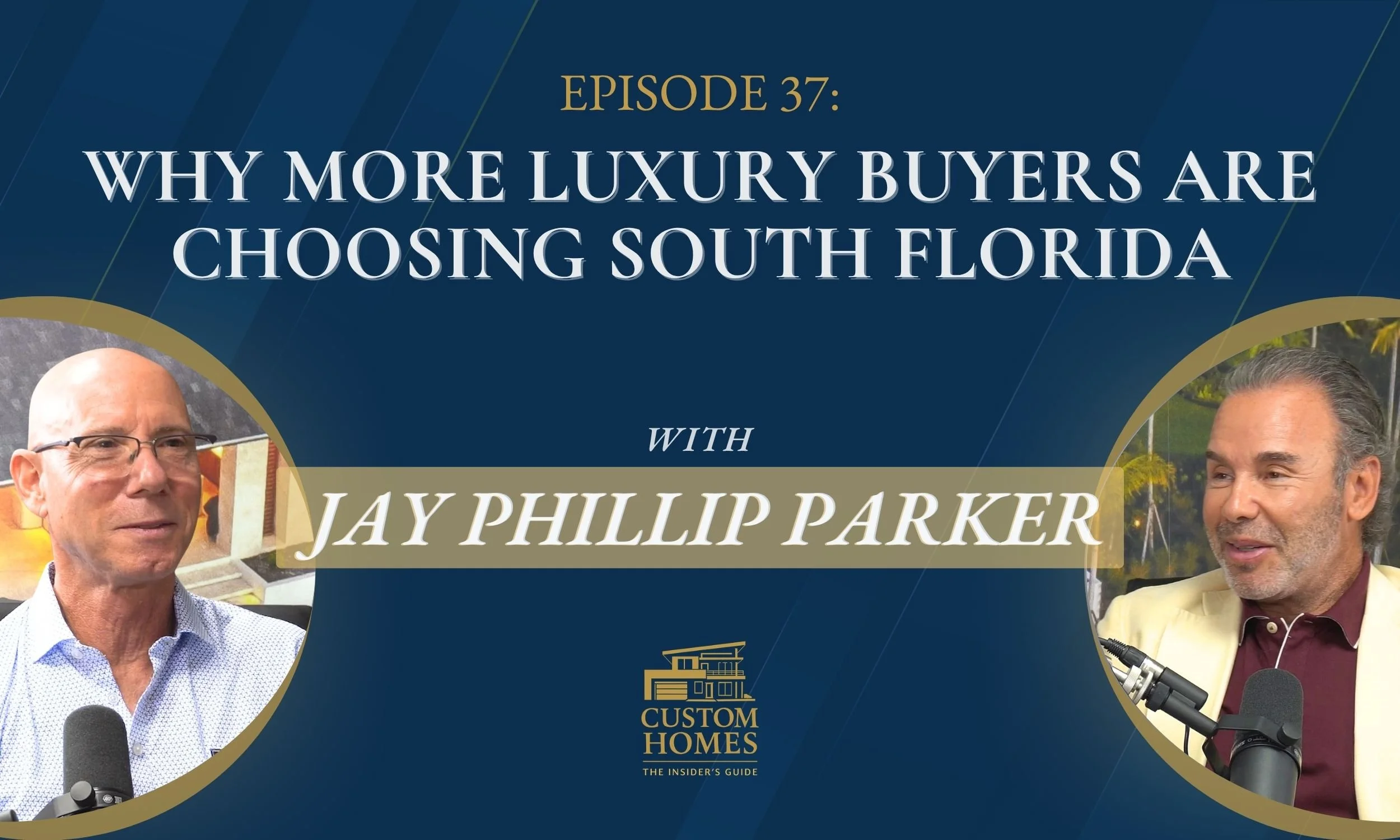
South Florida's luxury real estate market has evolved from an area known largely for second homes and investment properties into a place where affluent buyers are choosing to live, move their businesses, and build their lives. That shift is creating demand for homes and communities designed around a more permanent kind of luxury.
Today's buyers are looking beyond the house itself. Privacy, land, security, quality, accessibility, and lifestyle are all influencing what makes a South Florida property worth pursuing, while hospitality-driven amenities and services are raising expectations for the ownership experience.
With decades of experience watching South Florida evolve, Jay Phillip Parker of Douglas Elliman brings a perspective shaped by both the market and the broader forces behind its growth. His insights connect the movement of wealth and businesses with changing buyer expectations and what people ultimately want from a place they choose to call home.
LISTEN TO EPISODE 37 (FULL TRANSCRIPT ON TIGTCH.COM)
Key Takeaways
Why South Florida continues attracting wealth, major companies, and luxury development
What today’s affluent buyers expect from modern luxury homes and communities
How branded residences and hospitality-style amenities are raising buyer expectations
Why privacy, larger lots, and estate-style living continue to gain demand
What sellers often overlook when pricing luxury properties
How location, accessibility, and lifestyle influence long-term property value
Why luxury homeownership requires ongoing maintenance, planning, and support
South Florida Has Become More Than a Second-Home Market
Over the past several decades, the changing luxury market in South Florida has reflected a broader shift in who is choosing to live in the region. Jay describes a market that was once heavily associated with tourism, seasonal residents, and second or third homes, followed first by tax reform and then by the mass migration that accelerated during COVID. Businesses relocated as well, bringing more high-net-worth individuals and families to South Florida.
The more important change, Jay believes, is that many of these buyers are no longer simply purchasing a place to visit. They are choosing South Florida as their primary home, creating a fundamentally different kind of demand. People tend to be more committed to the properties where they actually live, particularly when those homes are connected to their families, businesses, and daily routines.
Jay also sees the impact extending beyond real estate. As more affluent residents and companies move into the region, they create demand for restaurants, shopping, healthcare, education, cultural institutions, infrastructure, and other services. In his view, the growth of luxury real estate and the growth of South Florida itself are increasingly connected.
What Luxury Buyers Are Looking for in South Florida
At the highest end of the market, buyers can have very different ideas of what makes a property desirable. Some prefer the energy and convenience of an urban setting, while others want substantial land, privacy, security, and a greater sense of separation. Jay sees both preferences in the market, with quality remaining a common expectation.
For buyers seeking estate-style living, the homesite can be just as important as the house. Larger parcels offer room for privacy, outdoor living, customized features, and greater flexibility. But space alone isn't enough. A property that provides privacy while remaining reasonably connected to Miami, Fort Lauderdale, Palm Beach, airports, and other destinations can offer a more compelling combination.
That balance is increasingly important in South Florida. Buyers aren't necessarily choosing between privacy and convenience anymore; they are looking for properties that can provide both.
Why Luxury Is Becoming More About the Lifestyle
The changing definition of luxury can also be seen in the way communities are being designed. Jay points to amenities such as pickleball and paddle courts, tennis facilities, indoor lap pools, wellness spaces, children's areas, workspaces, and conference facilities as examples of how developers are responding to what residents actually want to do.
The difference is subtle but important. Amenities aren't simply there to make a property sound impressive. An indoor lap pool, for example, can support a homeowner's commitment to health and wellness without requiring them to exercise outdoors in the South Florida heat. Workspaces can accommodate the realities of today's business owners, while children's spaces and gathering areas can make a community more functional for families.
Security and privacy fit into that same picture. For affluent buyers, luxury can mean having the freedom to enjoy their home without sacrificing convenience, access, or peace of mind.
When a Luxury Brand Means More Than a Name
Branded residences have become another way developers are responding to sophisticated buyers, but Jay makes an important distinction between recognition and substance.
A fashion or automotive brand may bring exclusivity and marketing appeal to a development. Hospitality brands, however, can bring an additional layer of value when their standards continue into the ownership experience through management, service, maintenance, and quality. Jay points to names such as Four Seasons and Ritz-Carlton as examples of brands whose hospitality expertise can extend beyond the building itself.
Wellness concepts can work in a similar way. When a property offers services and experiences designed around health and quality of life, the value is no longer limited to the physical residence.
For buyers considering a branded property, the better question may therefore be what the brand actually contributes after closing—not simply how recognizable its name is.
Why Land Is Becoming an Increasingly Important Luxury Asset
South Florida can continue developing luxury homes, but it cannot create more land. Jay points to the limited supply of large single-family properties as an important factor behind continued demand for estate-style homes with space, privacy, and quality.
That scarcity becomes even more meaningful in established communities where large homesites are difficult to reproduce. Jay has watched properties purchased years ago for several million dollars appreciate substantially because they combined land with privacy, security, community, and location.
For buyers thinking about long-term value, those characteristics deserve attention alongside the home itself. A property can be renovated or redesigned, but the combination of a desirable location and substantial land is much harder to recreate.
When the Existing Market Doesn't Offer the Right Fit
The growth of South Florida's luxury market doesn't mean every buyer wants a custom home. Some buyers need a property quickly and are willing to choose from what is already available.
Others may eventually decide to build because they cannot find the combination of land, layout, finishes, privacy, and other features they want. That is where the Realtor's role can extend beyond finding an available property. Evaluating the opportunity, the surrounding market, and what the land can ultimately support can help buyers make a more informed decision before committing to a custom-home project.
Jay sees this as part of the natural progression of the market. A buyer might purchase a property today because it meets an immediate need, then consider custom construction later when the opportunity and circumstances make sense.
For someone starting with a custom-home goal, the same principle can work in reverse. Instead of asking whether an existing house is close enough to what they want, they can evaluate whether the right homesite gives them the opportunity to create something that fits their priorities from the beginning.
The Luxury Home Decisions Buyers Can Easily Overlook
Even experienced luxury buyers can encounter unexpected challenges when moving from purchasing a property to creating one. The shift from buying an existing home to building a custom property introduces a different set of decisions, expectations, and considerations. Decisions that affect the entire building experience can involve everything from expectations and budgeting to communication and the overall building process.
Choosing the House Before the Homesite
The architecture and finishes may make the strongest first impression, but the land, privacy, location, and surrounding community can have just as much influence on the long-term experience.
Assuming More Space Automatically Means More Value
A larger home only adds value when its size contributes to how the homeowner wants to live, whether through privacy, entertaining, wellness, family spaces, or flexibility.
Treating Amenities as a Numbers Game
A long list of amenities can look impressive, but buyers should consider which features will actually become part of their everyday lives.
Trading Privacy for Too Much Distance
A secluded property may sound ideal, but excessive distance from airports, business centers, restaurants, or other regular destinations can eventually become inconvenient.
Looking at the Brand Instead of the Experience
A recognizable name may attract attention, but the management, services, standards, and ongoing ownership experience are what determine whether the brand delivers meaningful value.
Forgetting the Cost of Owning the Luxury
Larger properties often require more ongoing care, including landscaping, repairs, systems maintenance, and sometimes additional staff. Luxury ownership is a long-term commitment, not simply a closing-day decision.
A South Florida Luxury Home Buyer's Reality Check
Before choosing a property, buyers can step back from the immediate appeal and ask a few practical questions:
☐ Does the property support the lifestyle you want?
Think about privacy, entertaining, wellness, family needs, and everyday convenience.
☐ Does the homesite offer enough space and flexibility?
Look at the land as carefully as the structure itself.
☐ Can you still reach the places that matter?
Consider airports, business centers, restaurants, schools, healthcare, and other frequent destinations.
☐ Will the amenities actually become part of your routine?
Focus on how you expect to use them rather than how impressive they look on paper.
☐ What does a brand contribute beyond its name?
Look at management, service, maintenance, and the ownership experience.
☐ What makes the property difficult to replace?
Land, location, privacy, security, and quality can all contribute to long-term desirability.
☐ Have you considered the ongoing ownership requirements?
Factor in maintenance, landscaping, repairs, staffing, and property management.
☐ Would custom construction solve something the existing market can't?
If the right combination of features isn't available, building may provide a more suitable path.
Creating a Home That Fits the South Florida Lifestyle
South Florida continues to attract luxury buyers who are looking for more than an impressive address. They are choosing the region for its lifestyle, privacy, quality, accessibility, and the opportunity to create a home that supports the way they want to live.
For homeowners who don't find the right combination of features in the existing market, Landmark Custom Homes can provide a way to bring those priorities together through custom construction, creating something that feels distinctly their own.
If you're considering building a luxury custom home in South Florida, connect with Landmark Custom Homes today to explore what your property could become and how to bring that potential to life.