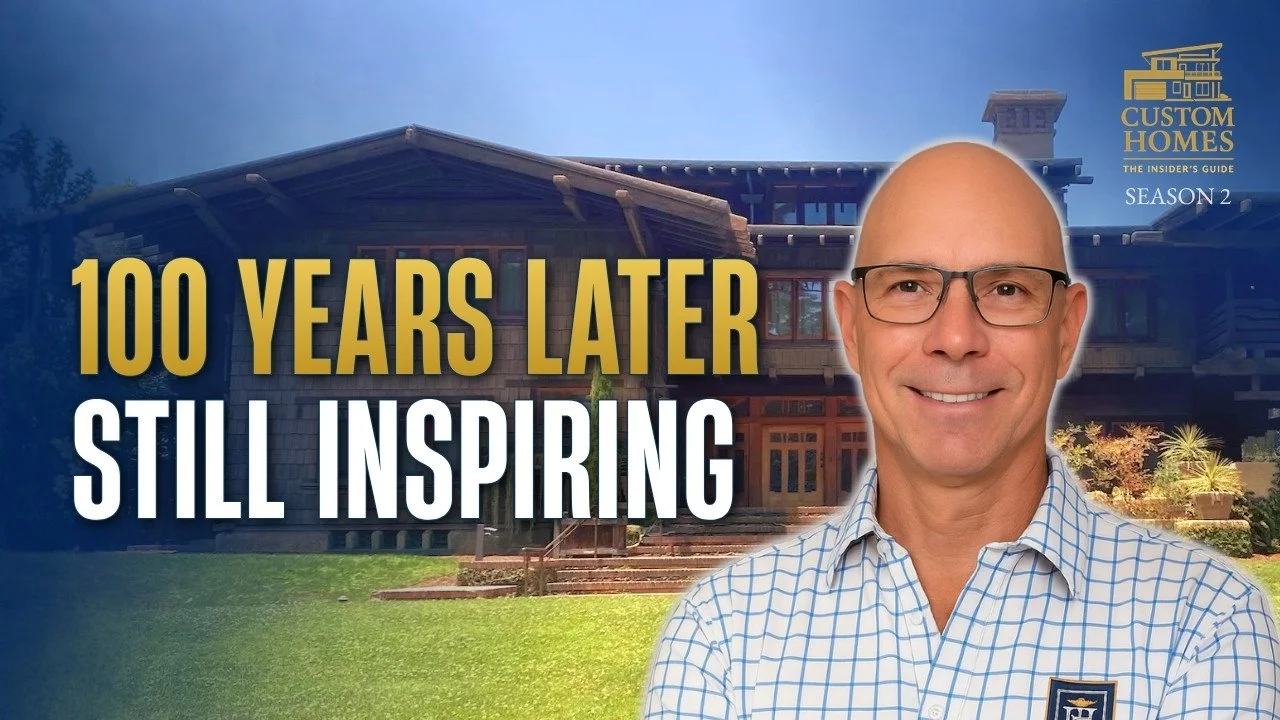
A timeless home is more than a beautiful building. It combines thoughtful architecture, quality craftsmanship, practical planning, and a design that reflects how people live. Rather than relying on short-lived trends, a timeless home responds to its surroundings and creates spaces that remain meaningful for years to come.
For custom home builder Rick Bell, the answer goes beyond architectural style, size, or cost. After more than 40 years of experience building homes throughout South Florida, he has come to see a home as something much more meaningful: a setting for family life, personal memories, and lasting connections.
His visits to Monticello, Hearst Castle, Biltmore Estate, and the Gamble House raised an important question: What can the great homes of the past teach us about the homes we build today?
For homeowners planning a custom home, these historic landmarks offer valuable lessons in design, craftsmanship, collaboration, and thoughtful planning.
LISTEN TO EPISODE 39 (FULL TRANSCRIPT ON TIGTCH.COM)
Key Takeaways
● What makes a home timeless beyond its size, cost, or architectural style
● Why craftsmanship and thoughtful details contribute to lasting design
● Lessons from Monticello, Hearst Castle, Biltmore Estate, and the Gamble House
● What Addison Mizner, Frank Lloyd Wright, and Greene and Greene teach us about architecture
● How South Florida's climate and outdoor lifestyle should influence custom home design
● Why early planning and collaboration matter when building a custom home
What Makes a Home Timeless Beyond Its Architecture?
A house is a structure. A home is where life happens.
It is where families gather around the dinner table, children grow up, holidays become traditions, and everyday moments turn into lasting memories. A welcoming porch, a well-planned kitchen, or a comfortable gathering space can become just as meaningful as the architecture surrounding it.
A beautiful design may create a strong first impression, but the experience of living in the home is what gives it lasting significance.
For homeowners planning a custom home, this means looking beyond the immediate visual impact. Consider how the family will use each space, how the home will support daily routines, where privacy matters, and how needs might change over time.
A timeless home does not have to follow a particular architectural style. Its design should bring together functionality, materials, craftsmanship, and personal preferences in a way that feels cohesive and appropriate for its setting.
What Can Historic Homes Teach Us About Timeless Design?
Rick's visits to historic homes offered different perspectives on the relationship between architectural vision, practical planning, and craftsmanship.
Monticello: The Lasting Value of Vision and Innovation
Designed by Thomas Jefferson, Monticello made a lasting impression on Rick because of Jefferson's creativity, innovation, and willingness to challenge conventional thinking.
Rick was particularly interested in Jefferson's role in designing the home. The visit left such an impression that he purchased a sketch of Monticello, which remains on his wall today.
The lesson for custom home design is the importance of a clear vision. Before making architectural decisions, homeowners should understand what they want the home to accomplish and which priorities matter most.
A clear vision helps bring lifestyle requirements, architectural ideas, and practical considerations together into a cohesive design.
Hearst Castle: The Power of Vision and Collaboration
At Hearst Castle, Rick was struck not simply by the estate's scale, but by the vision behind it.
Its terraces, guesthouses, Neptune Pool, and expansive California coastal setting demonstrated what can happen when an ambitious idea is supported by the expertise needed to bring it to life.
Rick was also fascinated by architect Julia Morgan, whose work helped turn that vision into reality.
For custom home construction, the lesson is that an exceptional design requires more than an interesting concept. The homeowner, architect, and builder must coordinate their decisions so that the original vision can be translated into a practical, well-executed home.
Biltmore Estate: Why Beauty Requires Thoughtful Planning
Biltmore Estate offered Rick another important lesson. Beyond its grand spaces, gardens, staircases, and craftsmanship, he noticed the thought behind the design.
Its planning, engineering, and practical decisions demonstrated how much consideration goes into creating a successful building. Rick specifically recalled learning how fire protection concerns influenced design decisions throughout the estate.
The lesson remains relevant to modern custom homes. Safety, engineering, functionality, and building performance should support the architectural vision rather than become afterthoughts.
The Gamble House: Craftsmanship Lives in the Details
The Gamble House in Pasadena may have been Rick's most influential visit. It was not the largest or most elaborate home he had seen, but its craftsmanship and thoughtful details made a lasting impression.
He noticed the exposed joinery, stained glass, custom-designed furniture, natural ventilation, use of light, relationship between interior and exterior spaces, and detailed woodwork.
Nothing felt accidental. Every element appeared intentional and connected to the larger architectural experience.
The Gamble House illustrates why craftsmanship matters in timeless home design. Quality is not measured only by a home's size or expensive finishes. It can be seen in the precision of a joint, the way natural light enters a room, or how different materials work together.
For homeowners, this means considering how details will be executed, not just how they appear in architectural drawings or renderings. Material selection, construction techniques, and the coordination of custom features all contribute to the character of the finished home.
What Can Greene and Greene, Frank Lloyd Wright, and Addison Mizner Teach Us?
Rick's exploration of timeless architecture has led him to three influential architectural voices: Greene and Greene, Frank Lloyd Wright, and Addison Mizner.
Their approaches differed, but each offers lessons that remain relevant to custom home design.
● Greene and Greene: Their Arts and Crafts homes demonstrate the value of detailed craftsmanship, carefully considered materials, and architectural elements that work together.
● Frank Lloyd Wright: His work explored the relationship between buildings and their surrounding landscapes, showing how architecture can respond to its setting.
● Addison Mizner: His architecture drew inspiration from history, culture, and travel, helping shape a distinctive South Florida architectural identity.
Their work raises questions that remain important today. How should a home connect with nature? How should it respond to its climate? How should its spaces serve a family? And how should the architecture belong to the place where it stands?
These questions are particularly relevant in South Florida, where climate, natural light, landscaping, and outdoor living can influence residential architecture. Mizner's work illustrates the value of drawing inspiration from historical styles while adapting design to the character and conditions of the region.
How Should South Florida's Climate Influence Custom Home Design?
A timeless custom home in South Florida should respond to more than its architectural style. The local climate, site conditions, landscape, and patterns of daily life should influence important design decisions from the beginning.
Consider these factors when planning a custom home:
● Indoor-outdoor living: Plan transitions between interior rooms, covered outdoor areas, and gardens so the spaces work together.
● Natural light and shading: Consider the sun's path, window placement, and shading to support comfort and make effective use of daylight.
● Ventilation and moisture management: Coordinate appropriate ventilation, air conditioning, and moisture-control strategies for a warm, humid climate.
● Weather resilience: Address applicable wind-load requirements, impact protection, drainage, and other site-specific considerations during design and engineering.
● Material selection: Evaluate durability, maintenance needs, and suitability for the local environment.
● Landscape and privacy: Integrate views, planting, outdoor gathering spaces, and privacy into the overall site plan.
These decisions should be tailored to the property, applicable building requirements, and the project's design. The goal is to make the architecture, engineering, materials, and construction approach work together.
For homeowners, this is one of the most important lessons of regional architecture: a home should be designed for the place where it will be built.
How Can You Design a Custom Home That Will Stand the Test of Time?
Building a timeless custom home does not mean reproducing an architectural style from the past. It means applying enduring design principles to contemporary living.
Start with a clear design vision. Understand how your household lives, what matters most, and what the home needs to accomplish. These priorities should guide decisions about layout, gathering spaces, privacy, and outdoor living.
Give craftsmanship the attention it deserves. Material choices, architectural details, and construction quality contribute to a home's character. Consider how custom features will be built and coordinated, not just how they look in a rendering.
Design in response to the surroundings. Climate, natural light, landscape, and outdoor living should influence the home's layout and architectural expression. In South Florida, these considerations are especially important.
Coordinate the architect and builder early. Early collaboration can help the team evaluate constructability, material availability, sequencing, budget implications, and complex design details before they become more difficult to change.
Plan for functionality and long-term comfort. Consider circulation, storage, lighting, mechanical systems, safety, and how the home might need to adapt as family needs change.
Balance personal expression with lasting appeal. A custom home should reflect the people who live in it. The goal is to make deliberate choices so that the architecture, materials, and details work together rather than depending entirely on passing trends.
Why Does Timeless Home Design Begin Before Construction?
The principles behind timeless architecture are established long before the final finishes are installed.
Early planning decisions influence how a home sits on its property, how its spaces connect, how materials are used, and how the project can be built. Changes made late in the process can also affect cost, scheduling, and coordination.
That is why a clear design vision and early collaboration between the homeowner, architect, and builder matter so much.
For homeowners planning a custom home in South Florida, these conversations help turn an architectural idea into a practical plan that reflects the family's lifestyle, the property's characteristics, and the project's priorities.
Building a Home That Becomes Part of Your Story
The homes that endure are remembered for more than their architecture. They remain meaningful because of the experiences they hold, the craftsmanship behind them, and the way they connect with the people and places around them.
For homeowners planning a custom home in South Florida, the lessons are clear: look beyond current trends, pay attention to the details, plan carefully, and design around the way your family wants to live.
At Landmark Custom Homes, these principles inform the design and construction of distinctive custom residences throughout Broward, Palm Beach, and Miami-Dade counties. Explore the company's approach to building a custom home, or contact Landmark Custom Homes to discuss your vision.
Frequently Asked Questions About Timeless Custom Home Design
What makes a custom home timeless?
A timeless custom home combines thoughtful architecture, quality craftsmanship, functional spaces, suitable materials, and a strong connection to its surroundings. Rather than relying entirely on current trends, it is designed around the homeowner's lifestyle and the property's characteristics.
What architectural styles are considered timeless?
No single architectural style is automatically timeless. Traditional, contemporary, and Mediterranean-inspired homes can all have lasting appeal when the design is cohesive, functional, well executed, and appropriate for its setting.
How can I make my South Florida custom home timeless?
Consider the property's conditions, local climate, natural light, outdoor living, material performance, and weather resilience from the earliest design stages. Coordinate these priorities with your architect and builder to create a cohesive design.
Why is craftsmanship important in custom home construction?
Craftsmanship affects how materials, architectural details, and custom features come together. Careful execution contributes to a home's character, consistency, and overall quality.
When should I involve a builder in the design process?
Involving a builder early can help the homeowner and architect evaluate construction methods, materials, budget considerations, and complex details while the design is being developed.
Can a timeless custom home still reflect modern living?
Yes. Timeless design does not require recreating a historic home. Modern layouts, materials, and building systems can support contemporary lifestyles while preserving the principles of thoughtful planning, craftsmanship, functionality, and connection to place.
MORE FROM THE INSIDER’S GUIDE TO CUSTOM HOMES PODCAST
Explore more practical guidance from The Insider's Guide to Custom Homes, hosted by Rick Bell. Visit the podcast episodes page to discover more insights into custom home design, planning, and construction.