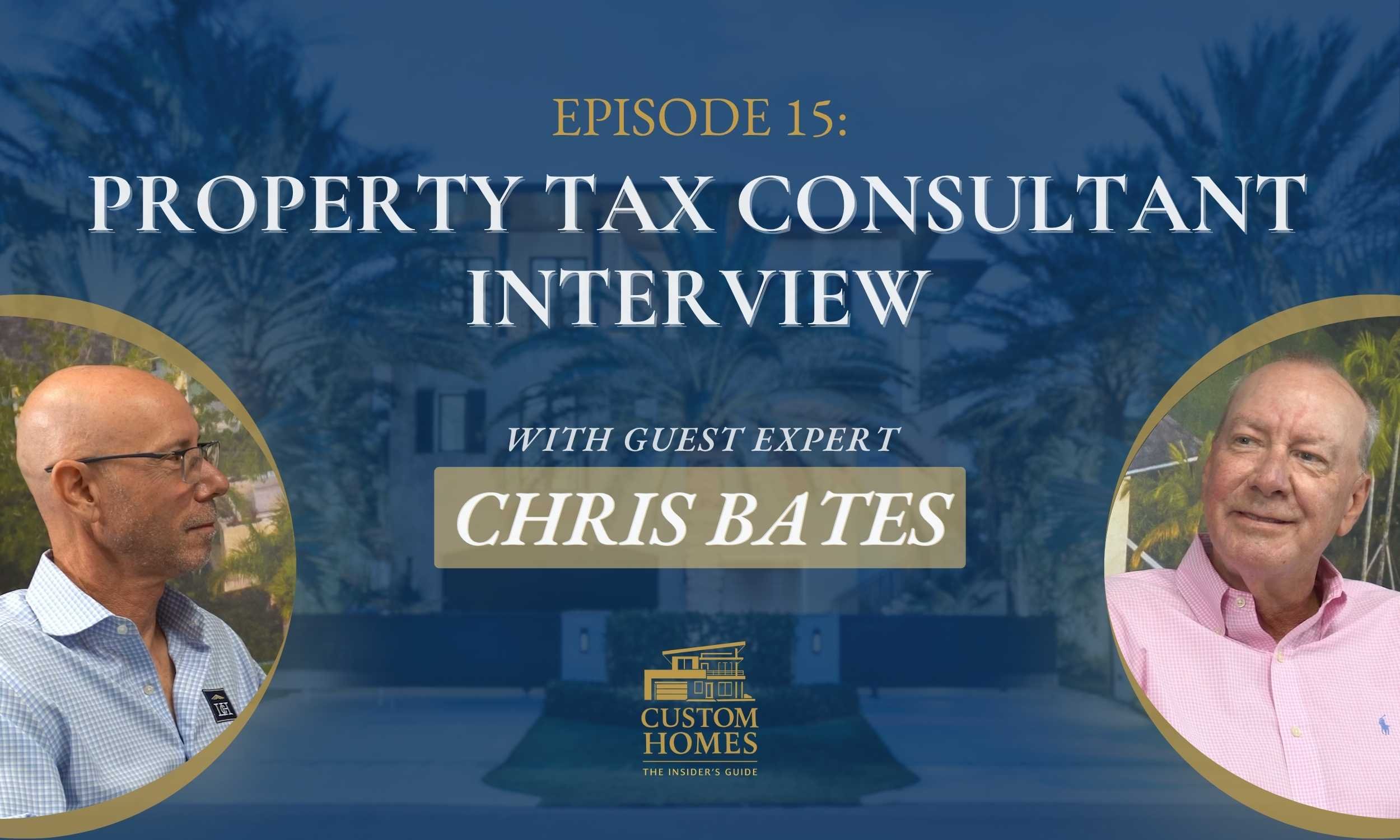
Many homeowners spend months planning the design, finishes, and budget for their custom home… only to be surprised later by the property tax bill. For luxury custom homes in Florida, property taxes can be more nuanced than many people realize, especially when compared to purchasing an already-completed home.
In this episode of The Insider’s Guide to Custom Homes, veteran property tax consultant Chris Bates explains how property taxes work on custom homes in Florida, how assessments are determined, and what homeowners can do to avoid unexpected tax burdens.
Property taxes are just one component of the overall financial picture homeowners should consider alongside construction budgeting and financing their custom home.
LISTEN TO EPISODE 15 (FULL TRANSCRIPT ON TIGTCH.COM)
Key Takeaways
How custom-built homes may be assessed differently than turnkey luxury homes in Florida
Why build cost and taxable value are often not the same thing
How timing your home’s completion can impact your first-year property tax bill
What happens when a property tax assessment seems too high
Why homestead exemptions are critical for Florida primary residences
How ownership and estate planning can affect long-term property tax liability
When it makes sense to appeal your assessment — and when it may not
Why Custom Homes Can Be Assessed Differently Than Purchased Homes
One of the lesser-known financial nuances of building a custom home is that Florida property appraisers typically do not have direct access to your construction contract or actual build cost.
As Chris Bates explains, assessors instead rely on broader valuation models, market data, and standard cost-per-square-foot assumptions when determining value. For highly customized luxury homes, that can sometimes result in assessed values below what the home actually costs to build, particularly when the property includes bespoke finishes, specialty spaces, or premium upgrades that standardized valuation models may not fully capture.
How Florida Property Appraisers Determine Value
When assessing a newly completed custom home, Florida property appraisers typically review a combination of building permits, construction plans, physical inspections, aerial imagery, and comparable sales.
Chris notes that while these methods establish a reasonable baseline, many luxury custom home features are difficult to fully quantify through standardized assessment models alone. Built-in specialty spaces, custom millwork, advanced home technology, and designer-level finishes may not always be reflected proportionately in the assessed value.
Why Completion Timing Can Affect Your First Tax Bill
The date your home is completed can significantly impact when improvements are added to the tax roll.
As Chris explains, Florida property is assessed based on its condition as of January 1 each year. If a home is not considered substantially complete by that date, some or all improvements may not be added until the following tax year.
For larger luxury builds, this can create a meaningful difference in first-year tax liability, making construction timing more financially significant than many homeowners realize.
This is one reason strategic planning around the construction schedule matters, particularly during the final phases of construction.
What to Do If Your Assessment Seems Too High
Each year, Florida homeowners receive a proposed property tax assessment through the annual TRIM Notice (Truth in Millage Notice), which outlines the property appraiser’s proposed valuation and estimated taxes for the upcoming year.
Chris advises homeowners to review this notice carefully, especially in the first year after construction, because if the assessed value appears excessive, there is only a limited window to challenge it.
He emphasizes that successful appeals are based on valuation evidence, not frustration over the tax bill itself. In other words, the argument must focus on proving the property’s assessed value is inaccurate rather than simply objecting to the amount owed.
Why Homestead Exemption Is So Important
For homeowners using the property as their primary Florida residence, Chris strongly emphasizes filing for a homestead exemption as soon as eligible.
Homestead protections can reduce taxable value and cap future assessment increases, helping preserve long-term tax savings as market values rise. Without those protections, taxable values may increase much more aggressively over time.
For high-value homes in appreciating markets, the long-term impact can be substantial.
Why Ownership Structure Matters for Long-Term Tax Planning
Property tax planning does not stop once the home is complete.
Chris points out that ownership transfers, trust structures, and estate planning decisions can affect whether favorable tax treatment, particularly homestead protections, is preserved or reset in the future. Improper structuring can create significant tax increases for heirs or family members inheriting the property.
For luxury homeowners, coordinating with estate planning and legal advisors early can help avoid unintended consequences later.
Property Tax Mistakes to Avoid When Building a Custom Home in Florida
Assuming Your Build Cost Determines Your Tax Assessment
Florida property taxes are not based solely on what you spent building your home. Assessments are based on appraised value methodologies, which may differ significantly from construction cost, especially for highly customized luxury homes.
Failing to Review Your First TRIM Notice Carefully
The first proposed assessment often establishes the baseline for future years. Missing the appeal window can mean losing your best opportunity to challenge an inaccurate initial valuation.
Delaying or Forgetting Your Homestead Exemption Filing
Failing to file for a homestead exemption on time can leave substantial tax savings on the table and may result in higher long-term tax exposure.
Structuring Ownership Without Tax Planning in Mind
Trusts, transfers, and ownership changes can unintentionally trigger reassessments or loss of favorable tax protections if not structured properly.
Waiting Until Move-In to Think About Property Taxes
Property tax planning should begin well before move-in. Construction timing, ownership setup, and filing deadlines can all affect your first-year and long-term tax liability.
Like many aspects of pre-construction planning, property tax strategy is most effective when addressed early rather than after move-in.
Key Property Tax Planning Considerations for Florida Custom Homeowners:
✔ Build cost and taxable value are not always the same, particularly for highly customized luxury homes
✔ Your projected completion date can affect when improvements are added to the tax roll
✔ Filing for homestead exemption promptly can help reduce taxable value and cap future assessment increases
✔ Your first TRIM Notice (Truth in Millage Notice) should be reviewed carefully for valuation accuracy
✔ Consult a property tax professional if your assessment appears excessive or inconsistent with market value
✔ Coordinate ownership and estate planning decisions with your legal and financial advisors early in the process
Building Strategically Means Planning Beyond Construction
Building a luxury custom home requires more than thoughtful design and quality construction. Property taxes, ownership structure, and long-term financial considerations should all be part of the conversation early in the process.
At Landmark Custom Homes, we support South Florida homeowners through every stage of the custom home process with strategic guidance that extends beyond construction.
If you’re planning a luxury custom home and want strategic guidance from the earliest stages of the process, contact our team to begin your project with a more informed approach to the financial decisions that shape long-term ownership.