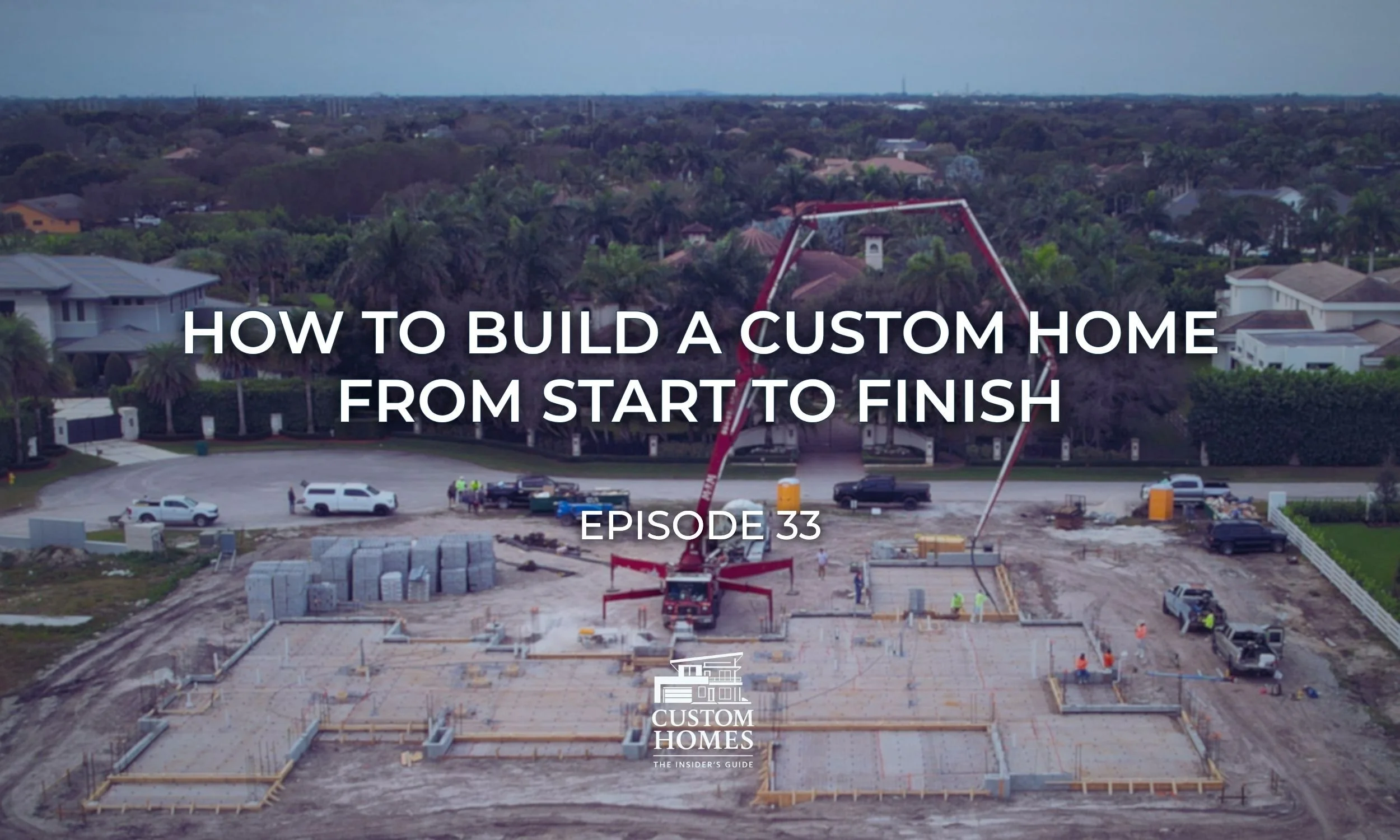
Building a custom home can feel overwhelming not because the process is difficult, but because many homeowners aren't sure what comes next. You hear terms like due diligence, pre-construction, selections, and punch lists, yet it's often difficult to see how each piece fits into the bigger picture.
The good news is that building a custom home follows a logical sequence. Each stage builds on the one before it, and understanding that sequence helps you make better decisions, avoid unnecessary surprises, and know what should be happening throughout your project.
LISTEN TO EPISODE 33 (FULL TRANSCRIPT ON TIGTCH.COM)
Key Takeaways
How the custom home building process follows a logical sequence, with each stage building on the one before it.
Why defining your vision and assembling the right team lays the groundwork for every decision that follows.
What happens during design, budgeting, due diligence, and pre-construction before construction begins.
How communication, timely decisions, and realistic expectations help keep your project moving throughout construction.
Why the custom home journey continues even after construction is complete, helping homeowners transition smoothly into their new home.
It All Begins With Your Vision
Every successful custom home starts with a simple question: What do you want your home to be? Before floor plans are drawn or budgets are discussed, it's important to think about how you want to live, what matters most to your family, and which features will have the greatest impact on your everyday life.
Many homeowners are eager to move straight into design, but spending time defining your vision creates a stronger foundation for every decision that follows. The more clearly you understand your priorities, the easier it becomes to evaluate design ideas, establish a realistic budget, and build a home that reflects both your lifestyle and your long-term goals.
Once that vision begins to take shape, the next priority isn't selecting finishes or finalizing plans. It's bringing together the people who will help turn those ideas into a successful custom home.
Building the Right Team Comes Before Building the Home
One of the most important decisions you'll make has nothing to do with the home itself. It begins with choosing the professionals who will guide the project. Your builder, architect, interior designer, and, when appropriate, your realtor or owner's representative all contribute to the planning process long before construction begins.
Bringing the right team together early creates opportunities for collaboration while important decisions are still flexible. Budget, design, scheduling, and constructability can all be discussed together instead of being addressed one at a time after plans are complete. Early collaboration helps keep these decisions connected as the project moves forward.
With your vision established and your team in place, the next stage is turning ideas into plans while keeping your budget and homesite working toward the same goals.
Design, Budget, and Due Diligence Work Best Together
Once your vision is clear and your team is in place, the planning process begins to take shape. This is where ideas become floor plans, layouts, elevations, and the early selections that start defining your future home. It's an exciting stage, but it's also where many homeowners make decisions that affect everything that follows.
One of the most important principles Rick emphasizes is that design should never happen in isolation. Your home's design, construction budget and homesite all influence one another. As plans develop, real construction costs begin to replace assumptions, allowing you to evaluate design choices against your investment goals instead of making expensive adjustments later. Designing to a realistic budget helps keep your vision and budget working together throughout the planning process.
At the same time, your homesite deserves just as much attention as your floor plan. Soil conditions, drainage, utilities, setbacks, zoning requirements, and other site-specific factors all influence what can be built and how much it may cost. Evaluating your homesite before buying helps uncover these considerations early, giving you a clearer understanding of the project before construction begins.
When your vision, budget, and homesite are working together, the project is ready to move into the next phase, where careful preparation lays the groundwork for a smoother construction experience.
Construction Is the Result of Everything That Came Before
Many people think construction is where the custom home journey truly begins. In reality, it's the result of every decision that came before it. When the planning process has been completed thoughtfully, construction becomes the execution of a well-prepared plan rather than a series of last-minute decisions.
As your home begins to take shape, you'll see steady progress through the foundation, framing, mechanical systems, and interior finishes. Some stages move quickly, while others require more time and coordination. Understanding that the pace naturally changes throughout construction helps set realistic expectations and reduces unnecessary frustration.
Even during construction, homeowner involvement remains important. Selections continue, questions arise, and occasional changes may still occur. Maintaining open communication with your builder and project team helps everyone stay aligned as the home moves closer to completion.
Where the Custom Home Journey Often Breaks Down
Building a custom home is a journey made up of connected decisions, with each stage preparing the way for the next.
When one phase is rushed, overlooked, or completed out of sequence, it can create challenges that affect the rest of the project. Recognizing where the journey commonly breaks down helps homeowners stay focused, make better decisions, and keep their project moving forward.
Rushing Into Design Before Defining Your Vision
Without a clear understanding of how you want to live and what matters most, design decisions often become reactive instead of intentional. Taking time to establish your priorities first creates a stronger foundation for every decision that follows.
Bringing the Project Team Together Too Late
Builders, architects, designers, and other professionals make better decisions when they collaborate from the beginning. Waiting until plans are complete often reduces flexibility and increases the likelihood of redesigns or missed opportunities.
Treating Budget, Design, and Due Diligence as Separate Decisions
These three elements work together throughout the planning process. When one changes, the others often need to be revisited to keep the project aligned with your goals and investment.
Underestimating the Value of Pre-Construction
Pre-construction is more than permits and paperwork. It's the stage where plans, selections, schedules, and coordination come together before construction begins. Investing time here helps create a smoother building experience later.
Expecting Construction to Be a Straight Line
Every custom home project moves through different phases, each with its own pace and priorities. Understanding that progress naturally varies helps set realistic expectations and keeps the focus on long-term results rather than day-to-day activity.
Thinking the Journey Ends at Closing
Receiving the keys marks an exciting milestone, but it's not the end of the homeowner journey. Learning your home's systems, completing final punch list items, and settling into your new home are all important parts of the process.
Your Roadmap to a Successful Custom Home
✔ Define your vision before making design decisions so every choice supports the way you want to live and the home you want to create.
✔ Build your project team early so your builder, architect, designer, and other professionals can collaborate from the very beginning.
✔ Keep your design, budget, and homesite aligned as your plans develop, recognizing that each one influences the others.
✔ Complete due diligence and pre-construction planning before breaking ground to reduce unnecessary surprises during construction.
✔ Stay engaged throughout construction by making timely decisions, maintaining open communication, and understanding what should happen at each stage.
✔ Recognize that construction is only one phase of the journey, with planning before it and homeowner orientation after it both playing important roles.
✔ Review your home carefully during the final stages, complete punch list items, and become familiar with your home's systems before moving in.
✔ Keep the entire journey in perspective, knowing that every stage builds on the one before it and contributes to the success of your custom home.
Build With the End in Mind
Building a custom home is about more than moving through a series of construction milestones. Every phase builds on the one before it, and the decisions made early in the process influence everything that follows. Understanding how each stage fits together helps homeowners ask better questions, make informed choices, and stay actively involved throughout the journey.
At Landmark Custom Homes, we believe every successful project begins with thoughtful planning, open communication, and a team committed to helping homeowners understand what comes next before moving forward.
If you're ready to begin your custom home journey, reach out to Landmark Custom Homes to start building a clear path to the home you've envisioned.